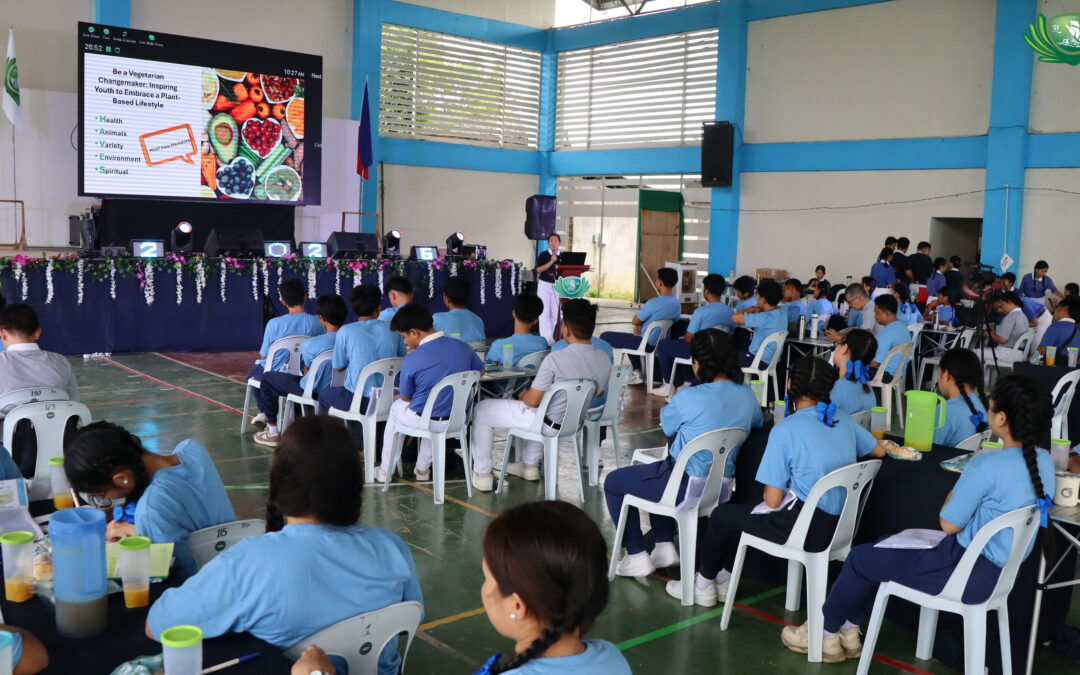
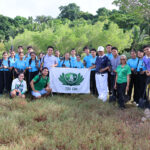
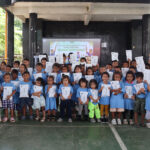
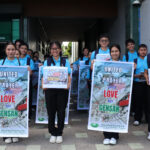
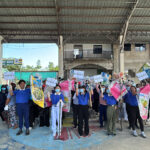
The Tzu Chi Bohol Youth Life Camp 2026 held on June 13, 2026, at the Immaculate Heart of Mary Seminary in Tagbilaran City, Bohol, provided campers with a meaningful journey of reflection, learning, and action centered on environmental responsibility and compassionate living. Through inspiring talks and interactive activities, participants were encouraged to examine how their daily choices affect not only themselves but also animals, communities, and the planet.
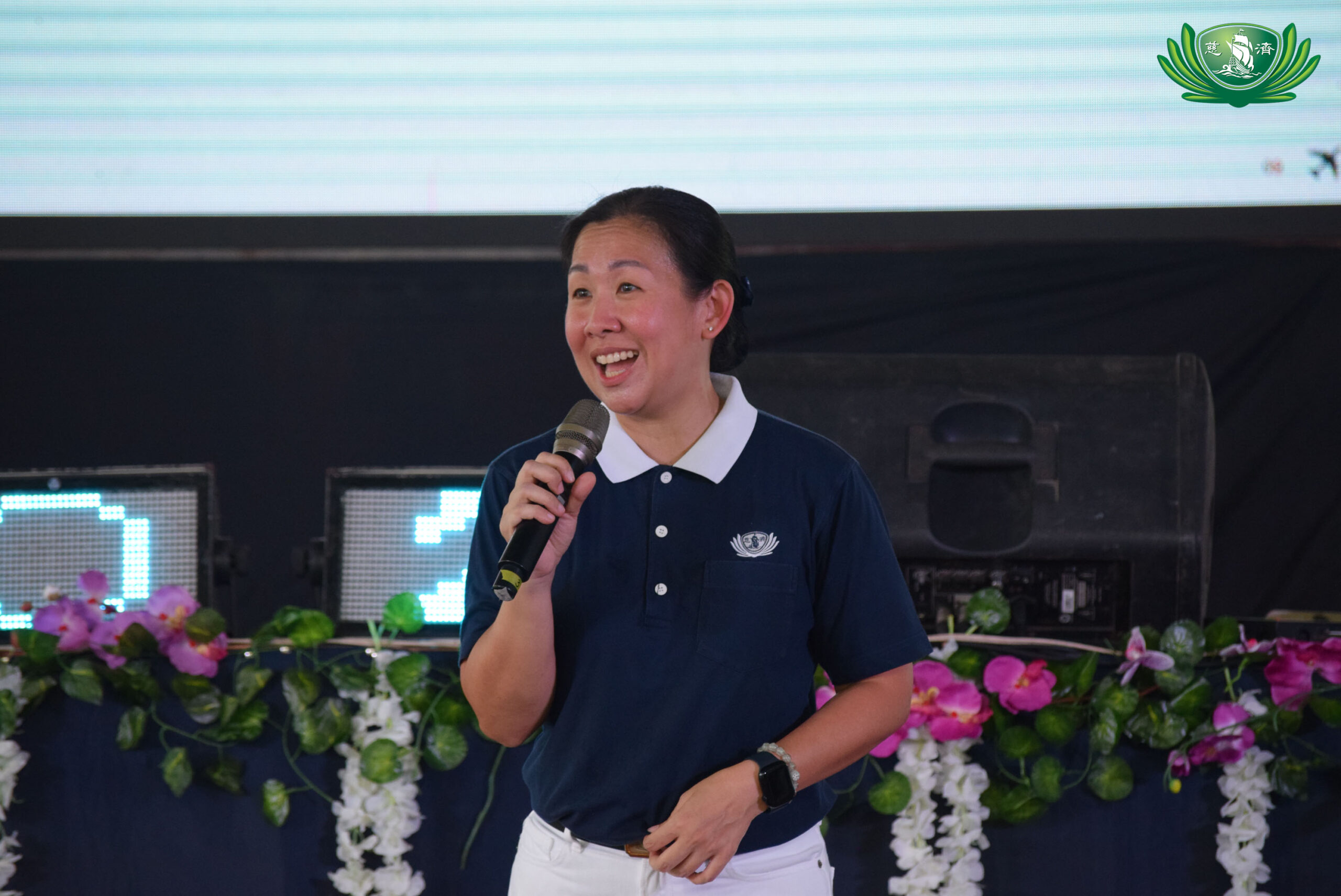
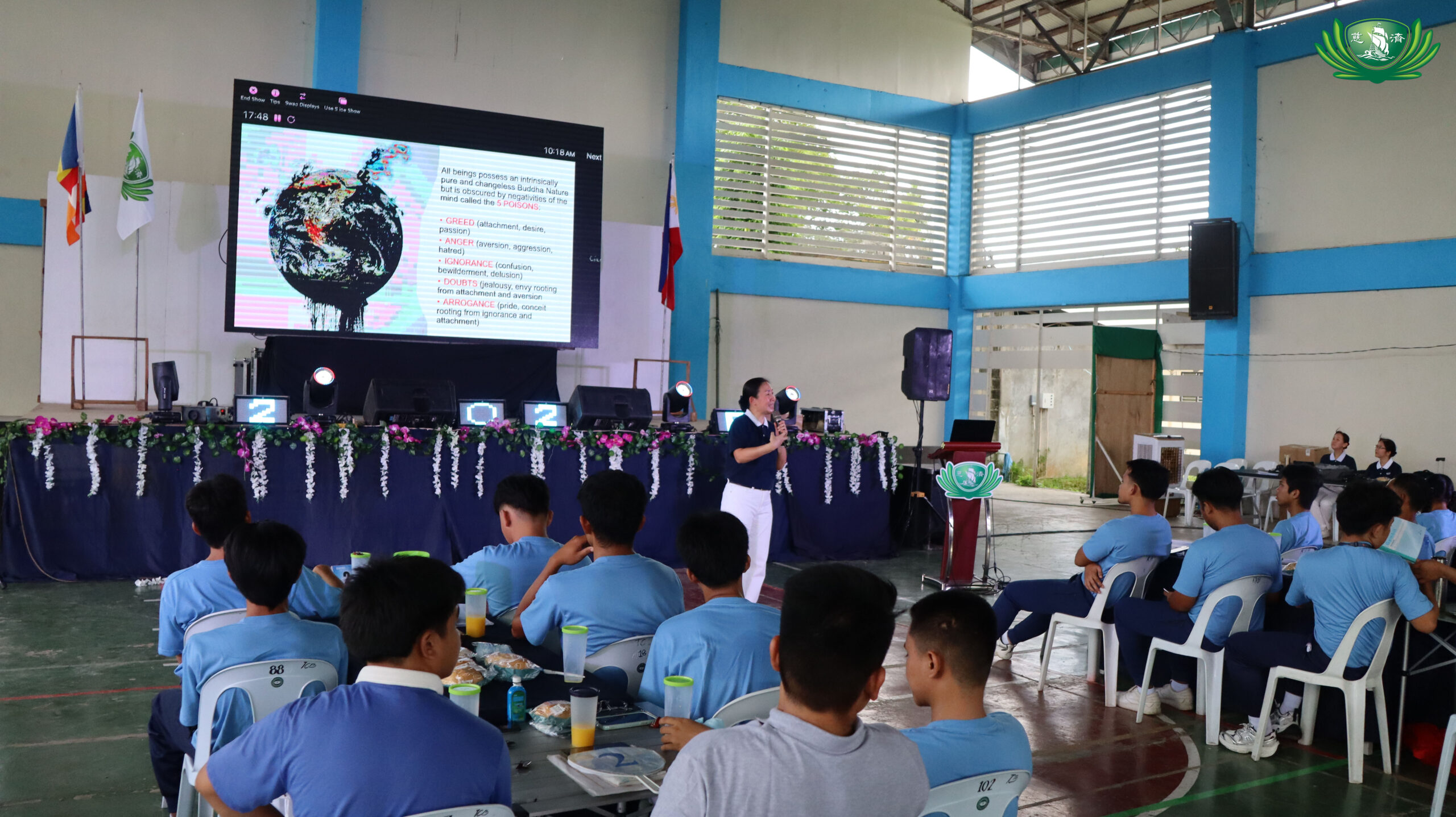
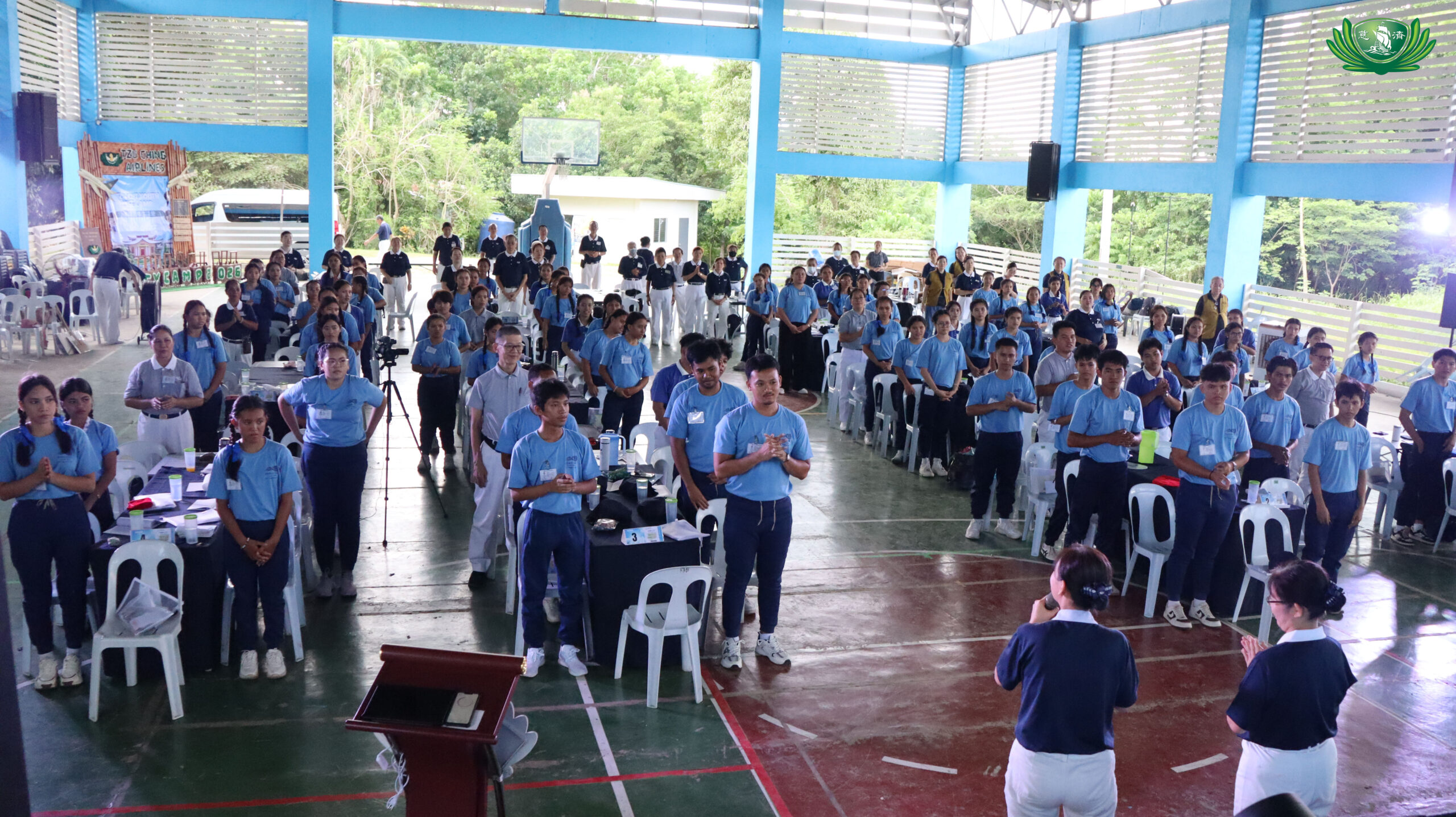
The day began with A First Flight Towards a Greener Planet, a talk led by Tzu Chi volunteer from Manila Sister Jacqueline Ong that challenged campers to take a closer look at the growing environmental issues facing the world today. Emphasizing that “the world is sick,” Sister Jacq highlighted how seemingly small habits, when multiplied across millions of people, can create significant impacts on the environment. Through discussions, videos, and real-life examples, participants were encouraged to recognize their role in either contributing to environmental degradation or becoming part of the solution.
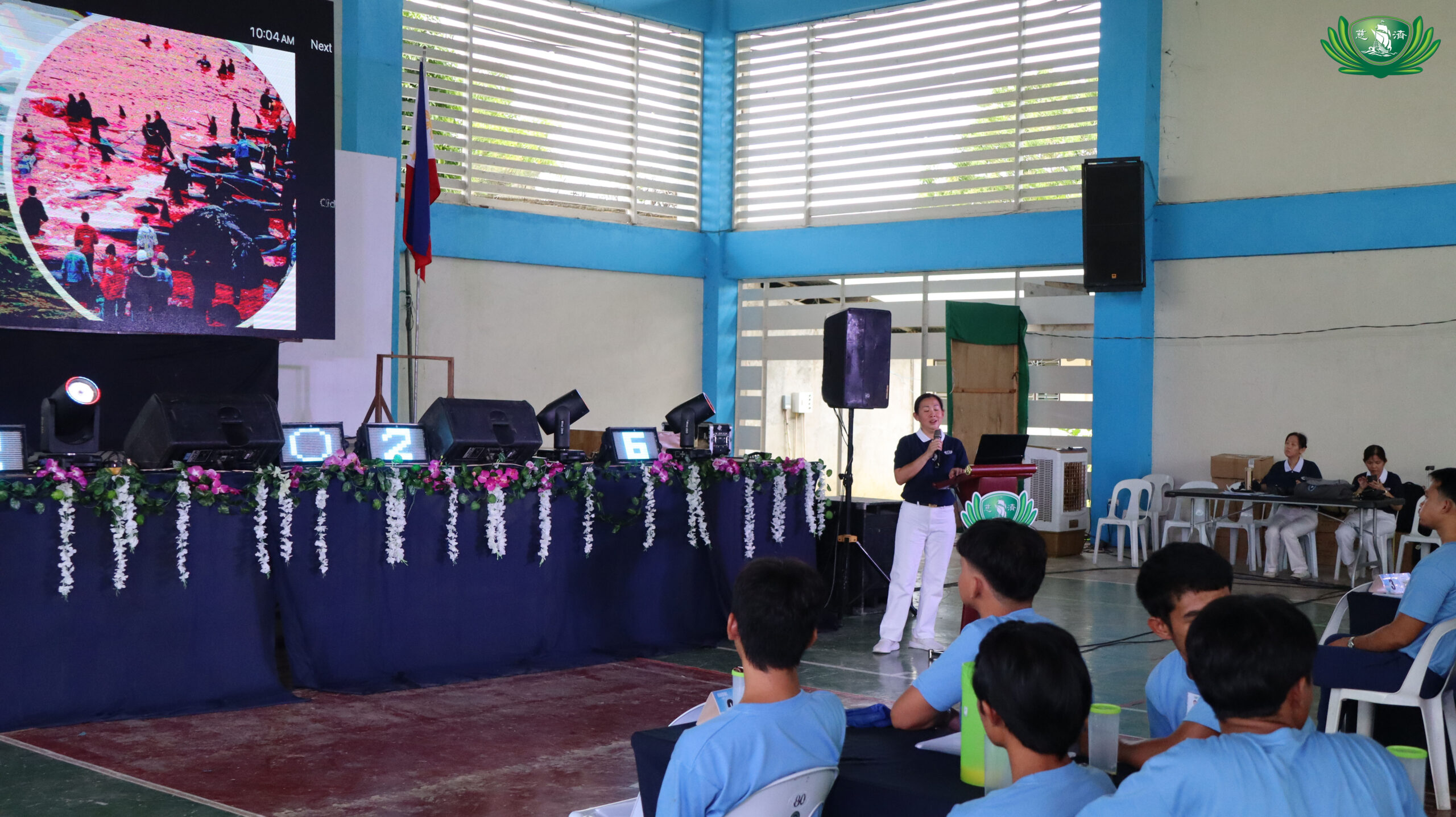
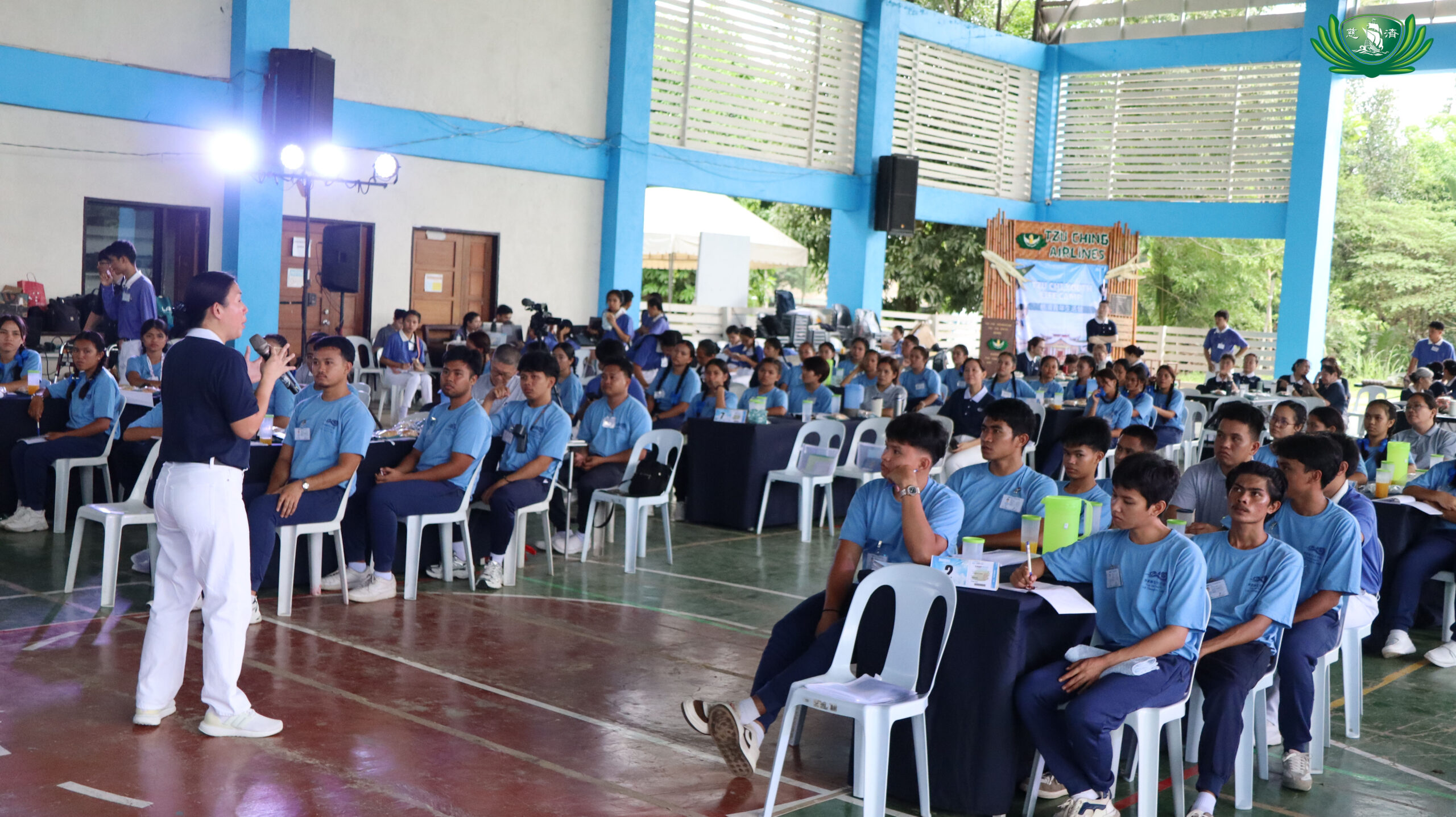
One of the key discussions focused on the environmental cost of meat production, particularly the extensive resources required for raising livestock. Campers were invited to reflect on how food systems influence land use, natural resources, and ecological balance. The session also featured a video presentation about a traditional practice in an island in Denmark where pilot whales and dolphins are driven into shallow waters and killed, not even for consumption, but were just left dead ashore. The footage left many participants reflecting on the realities of animal suffering and the ethical questions surrounding long-standing traditions.

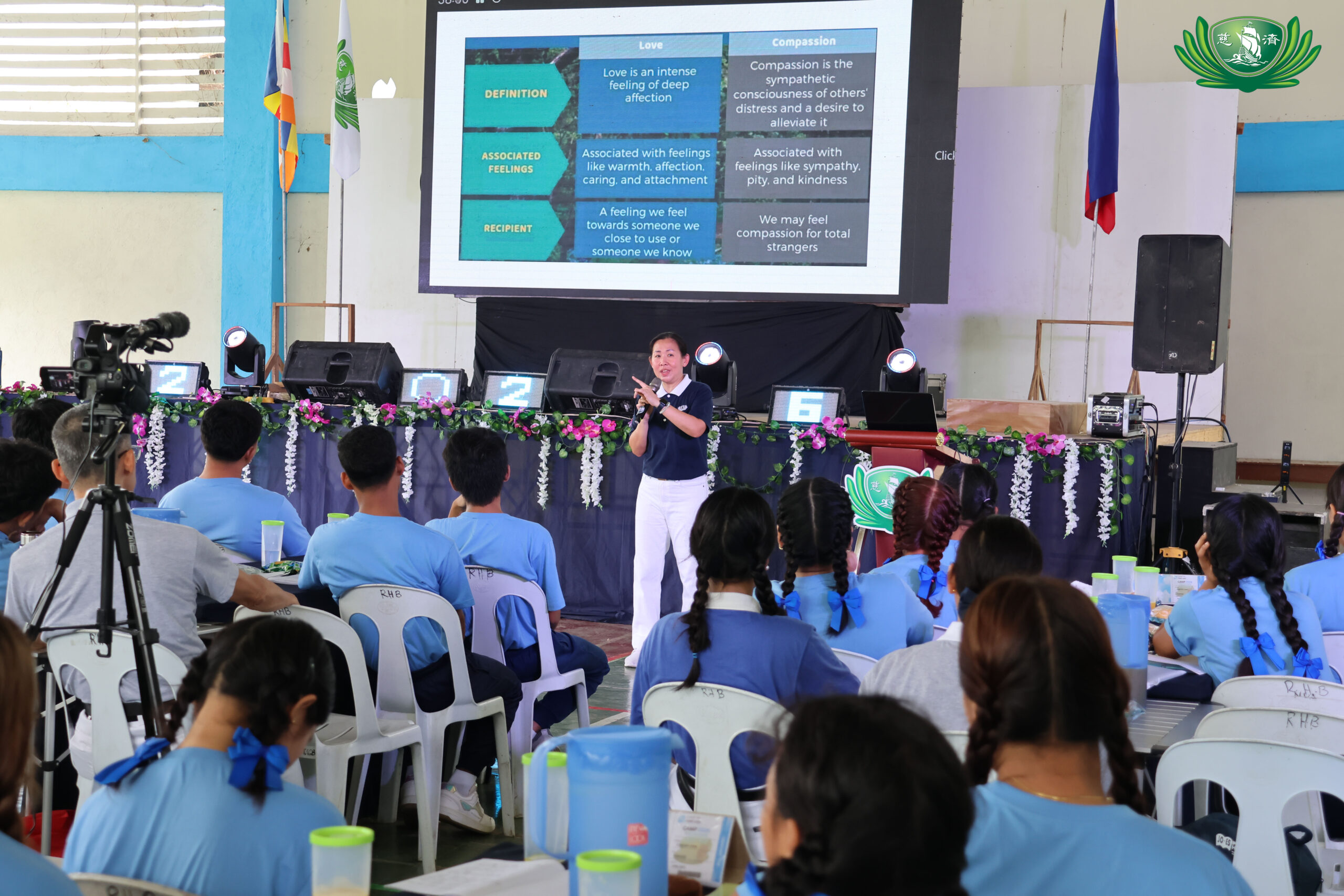
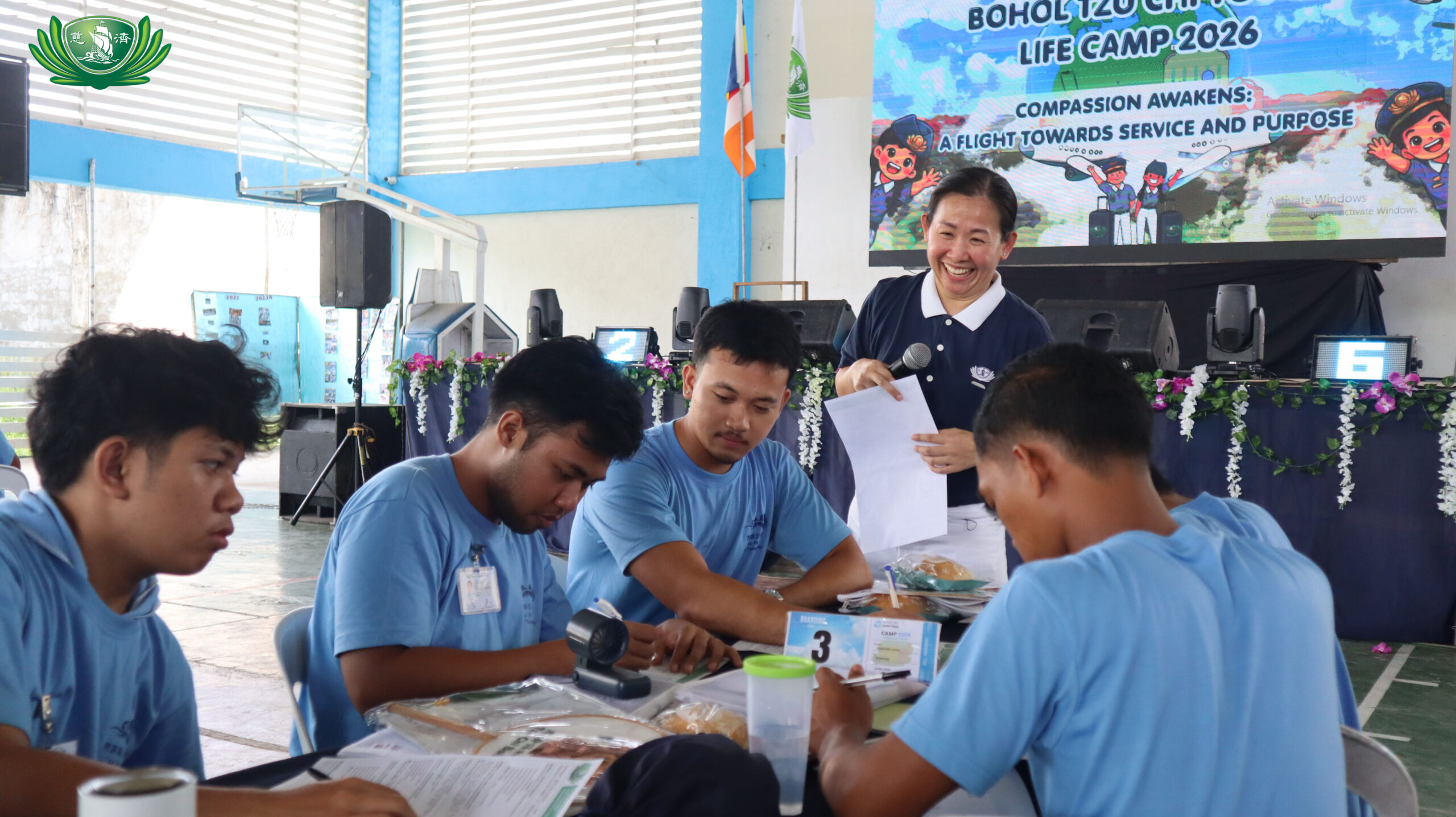
Sister Jacq further connected environmental issues to what Tzu Chi refers to as the Five Poisons of the World—greed, anger, ignorance, doubt, and arrogance—explaining how these tendencies often influence decisions that harm both society and nature. She also introduced Tzu Chi’s efforts in disaster relief, environmental protection, and recycling initiatives as examples of compassionate action in addressing global challenges.
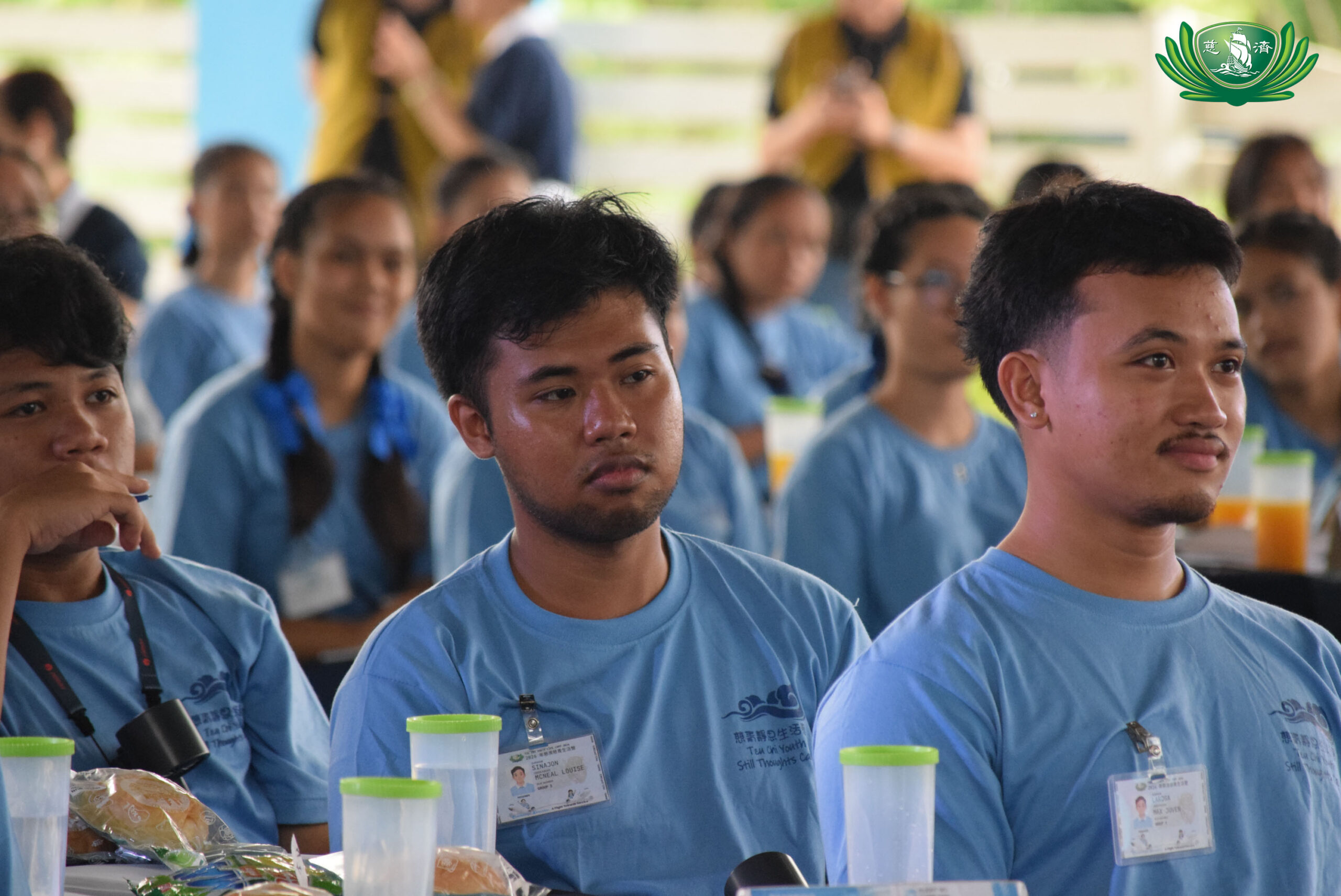
Mc Neil Louise Sinajon (center) listened attentively during the talk, reflecting on the importance of protecting the environment.

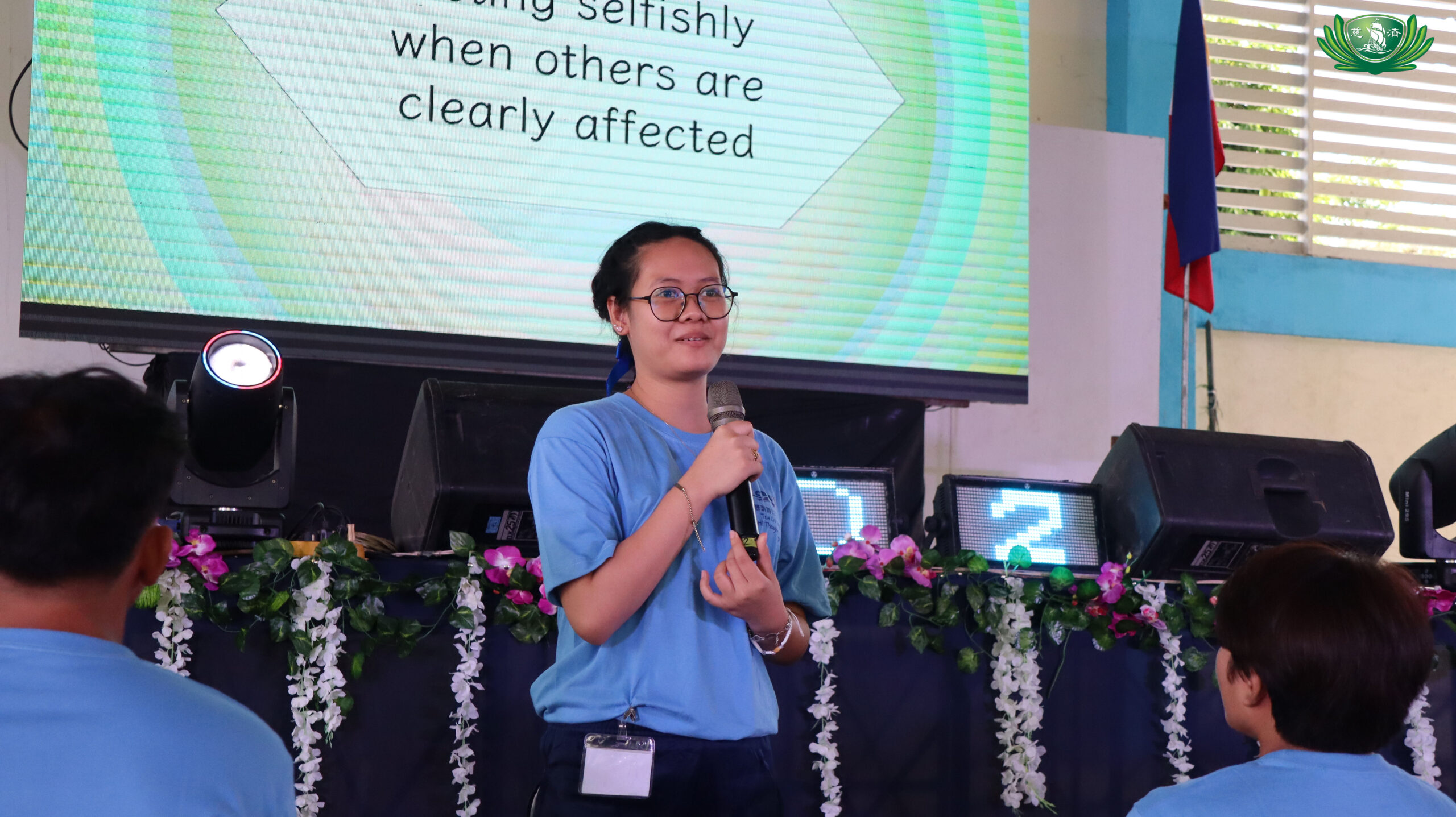
Trisha Bade (center, wearing eyeglasses) actively engaged in the discussion, showing thoughtful reflection on the value of compassion toward animals.
For Mc Neil Louise Sinajon, a third-year Bachelor of Science in Information Technology student, the talk served as a wake-up call. He shared that “our micro habits can have macro effects on our environment,” emphasizing the importance of collective responsibility in protecting the planet. Meanwhile, Trisha Bade, a third-year Bachelor of Science in Entrepreneurship student, reflected on the discussion about animal welfare, saying, “What they feel, we also feel,” a realization that challenged her perspective on compassion and responsibility toward living beings.
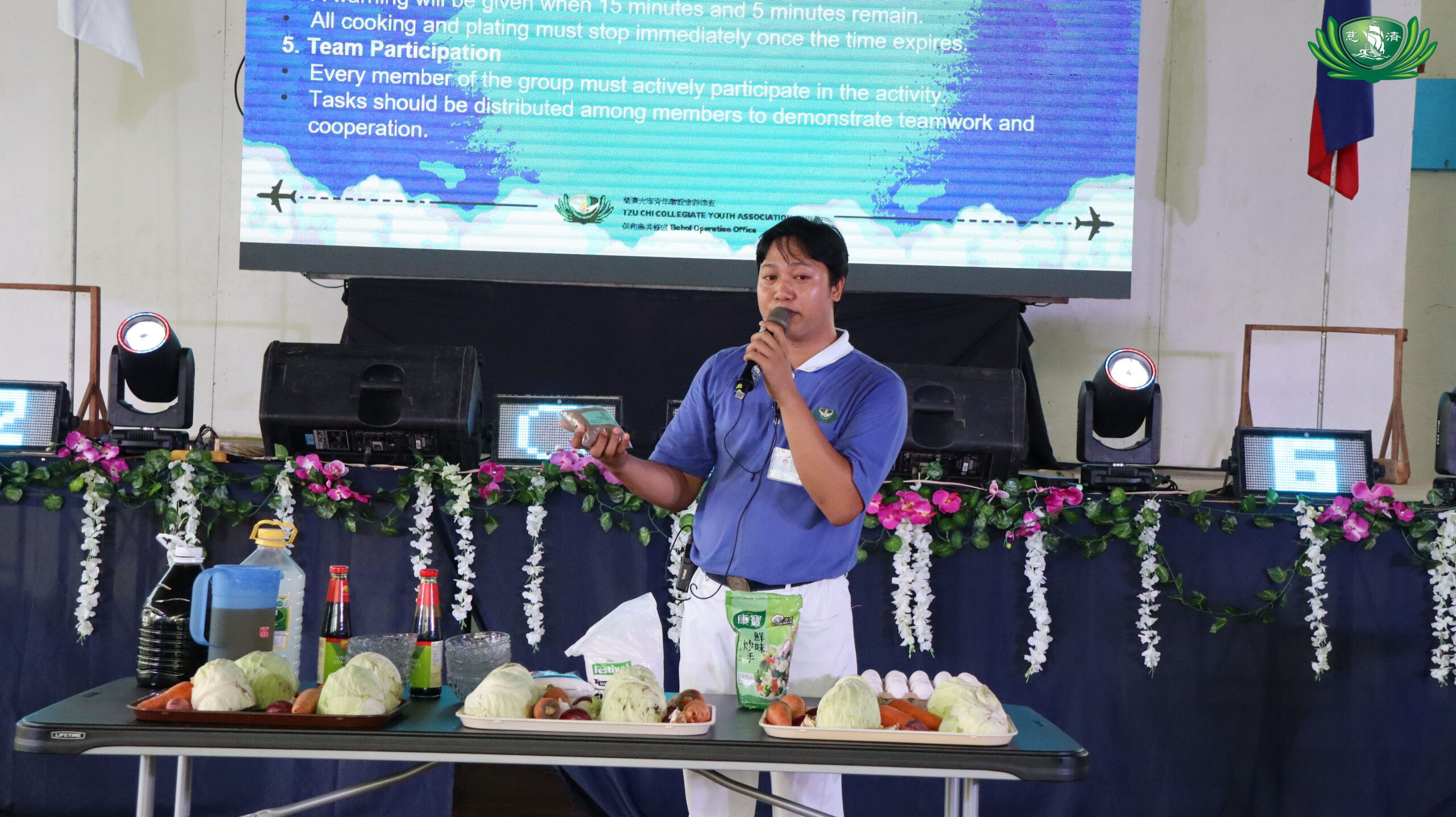
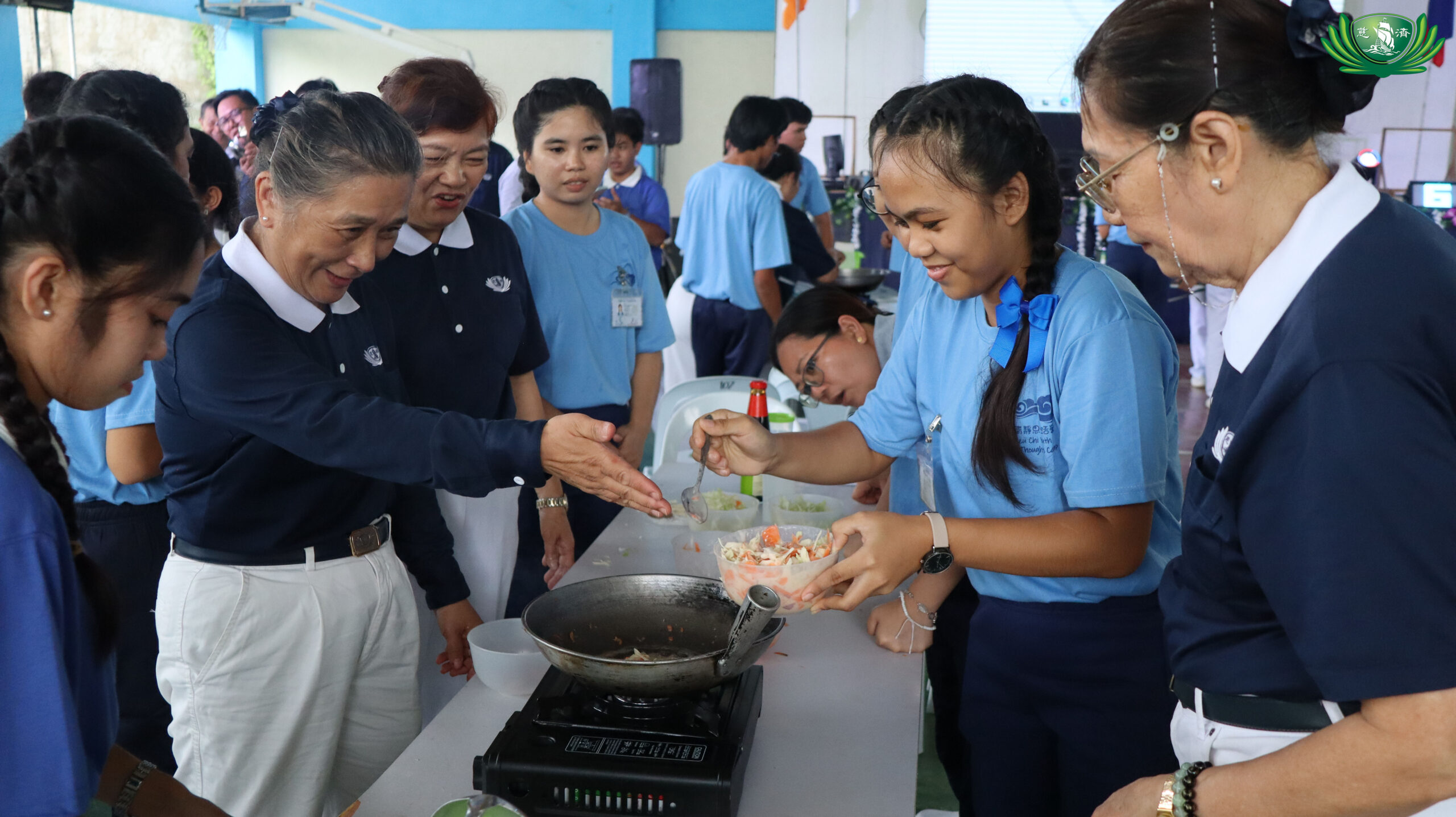
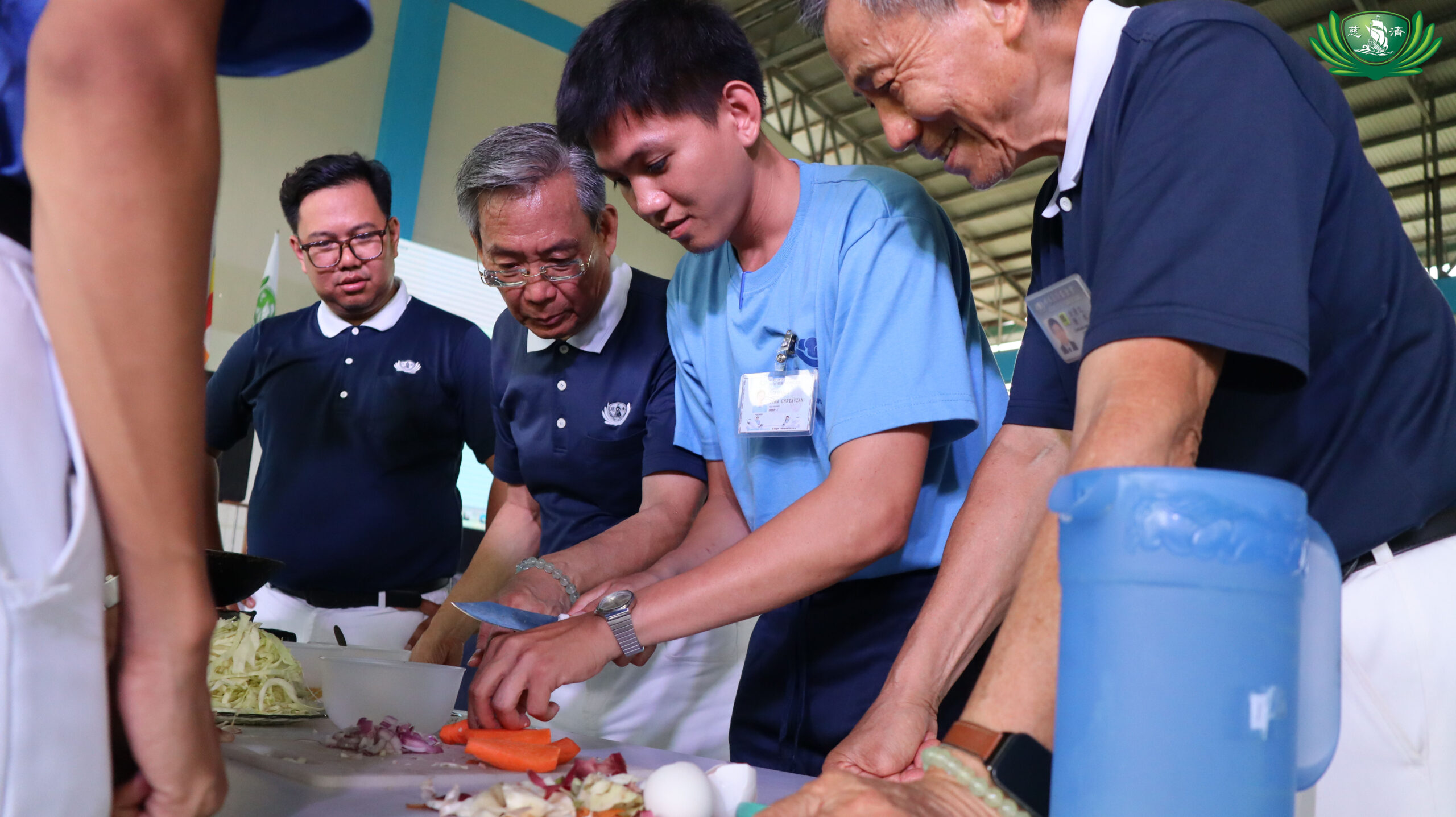
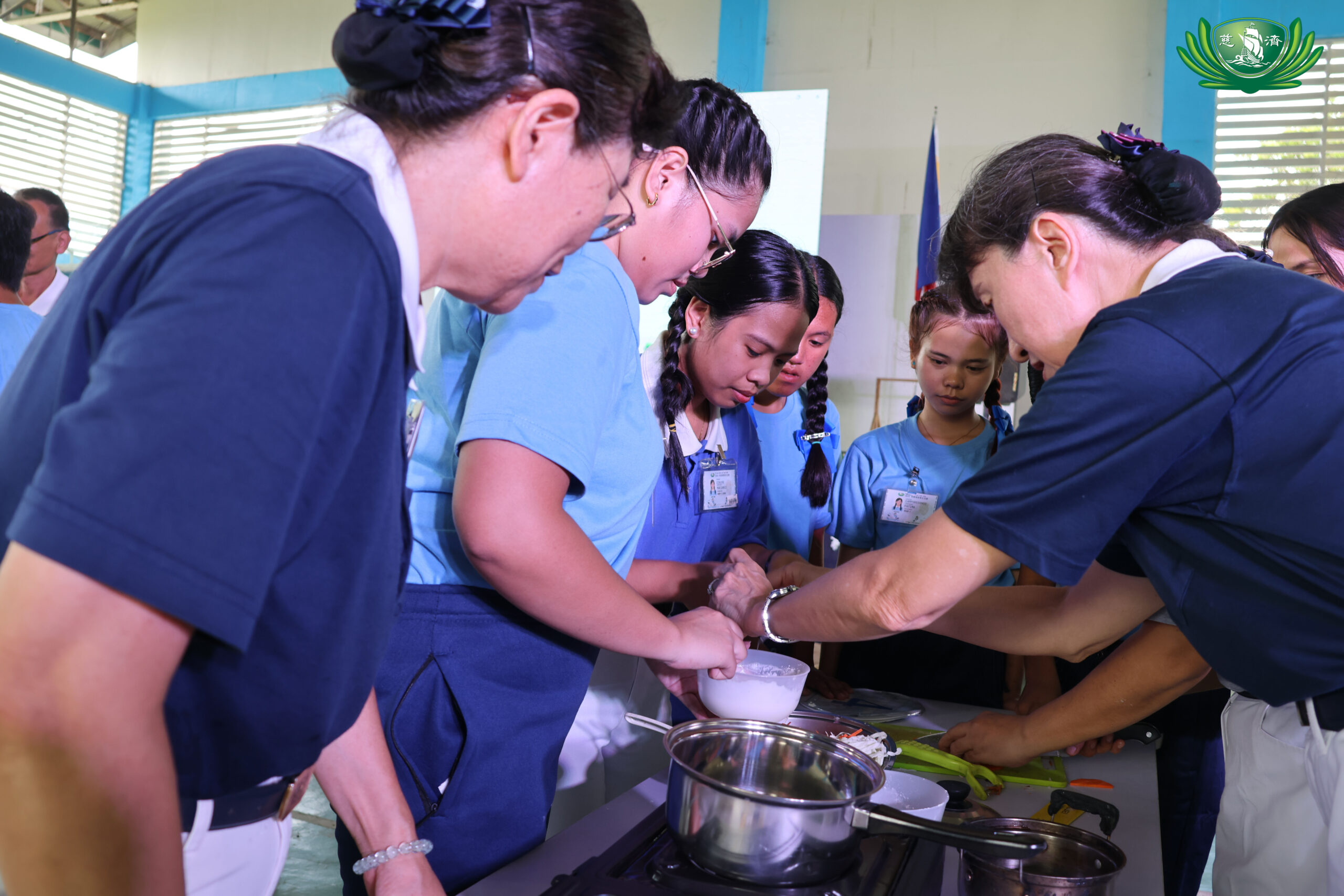
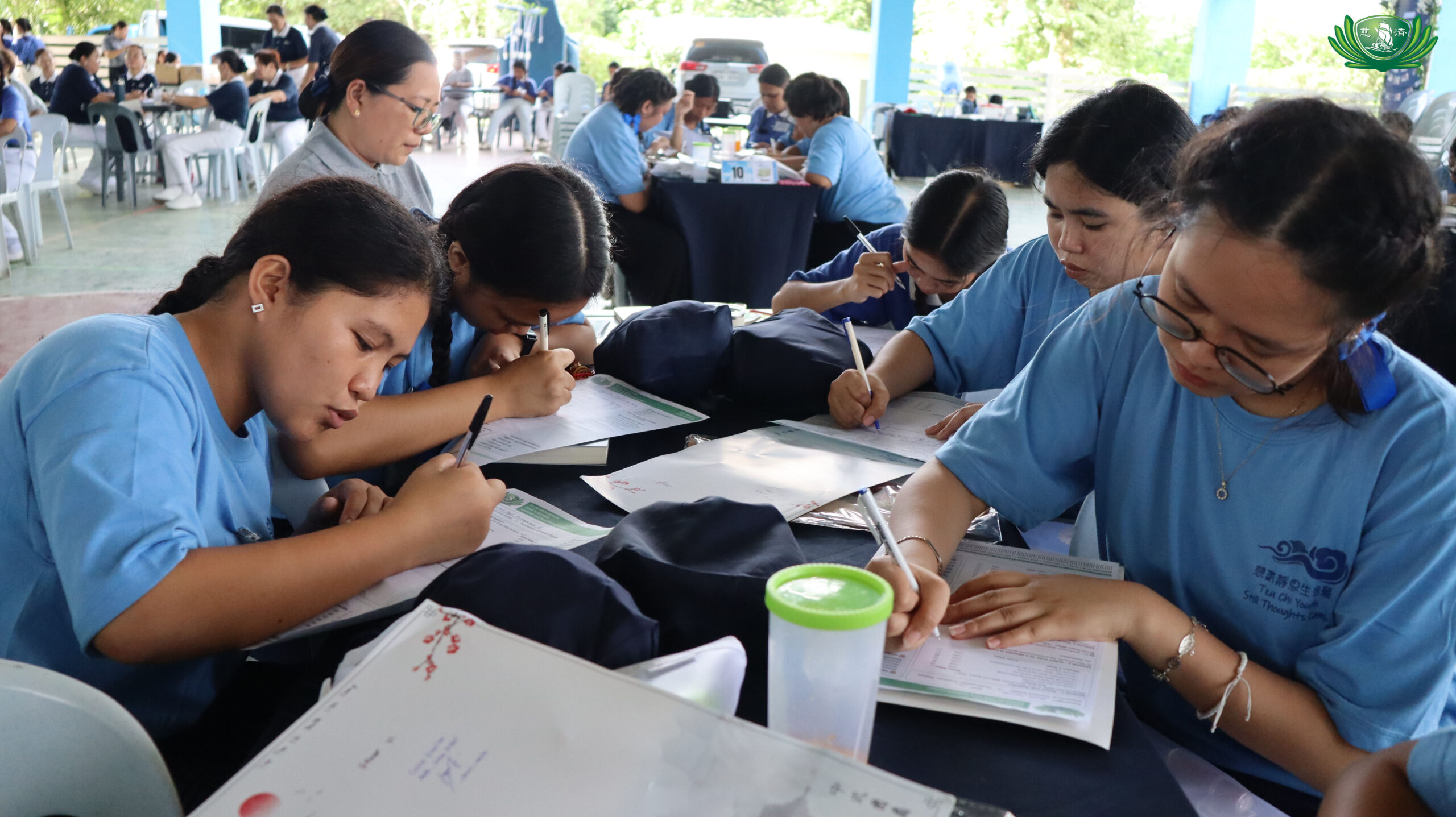
The lessons from the morning discussion were then brought into practice through a cooking challenge, where campers explored vegetarian cooking through creativity, teamwork, and mindful eating. The activity hall transformed into a lively cooking space as participants worked in groups to prepare plant-based dishes using assigned ingredients.
The challenge felt like a mini cooking show, with teams brainstorming ideas, dividing responsibilities, and supporting one another throughout the cooking process. More than simply preparing food, campers discovered that vegetarian meals can be both enjoyable and satisfying while reflecting values of compassion and environmental awareness.
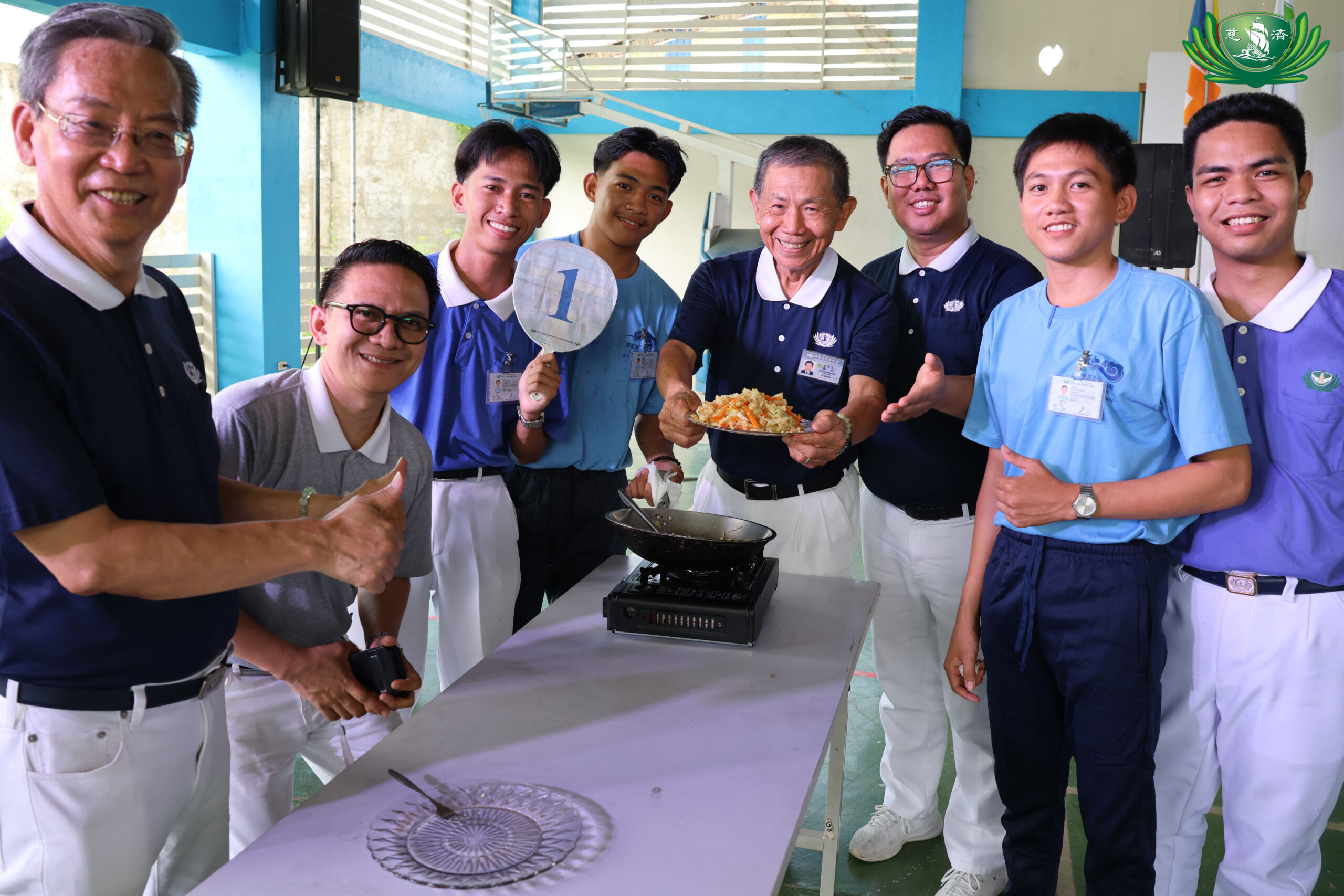
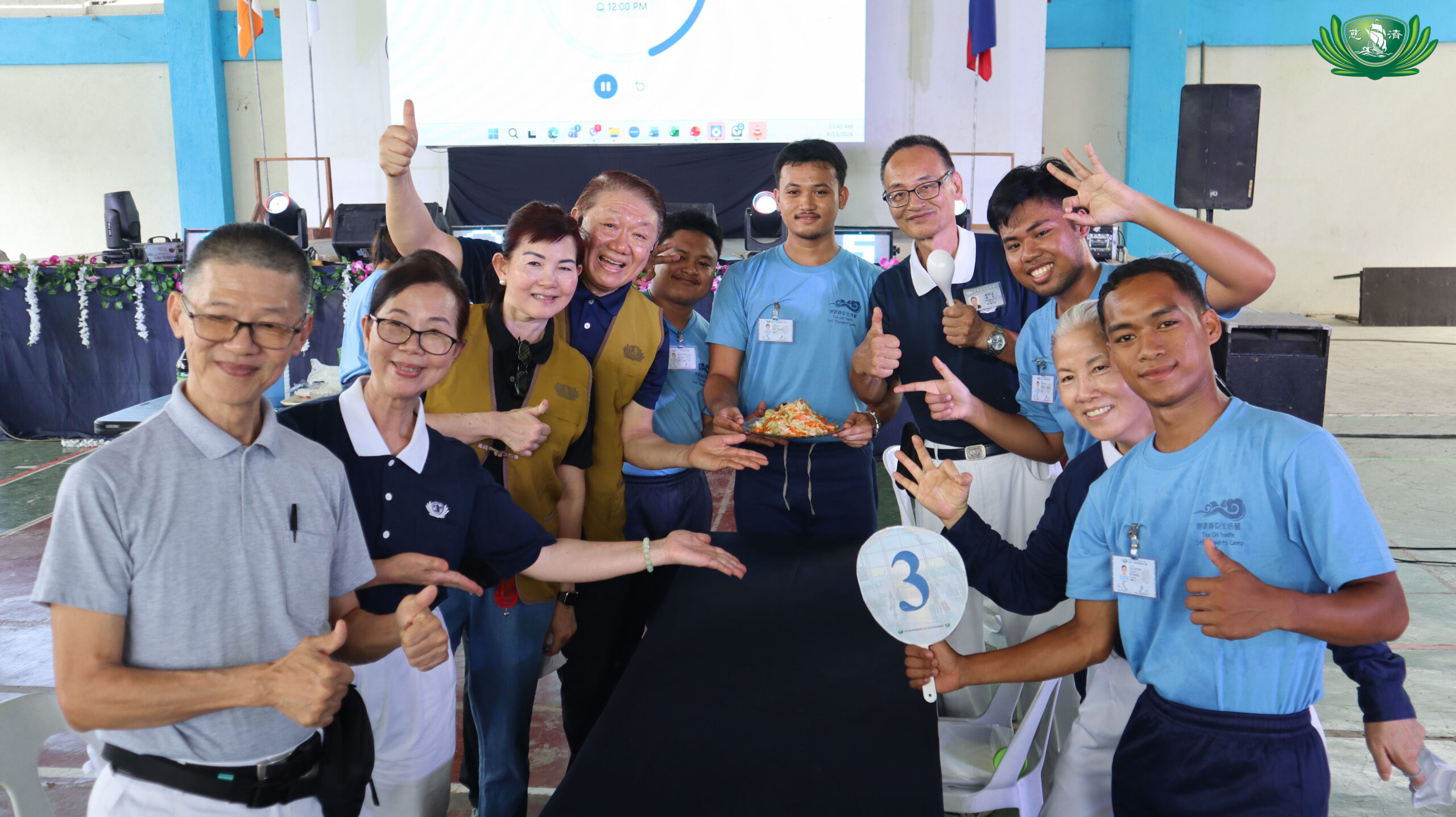
As laughter and collaboration filled the venue, participants learned that everyday food choices can become expressions of care for animals, personal health, and the environment. The activity concluded with group presentations showcasing a variety of creative vegetarian dishes, demonstrating that simple ingredients can be transformed into meaningful meals. More than a competition, the challenge served as a reminder that compassion can be practiced through even the most ordinary daily decisions.
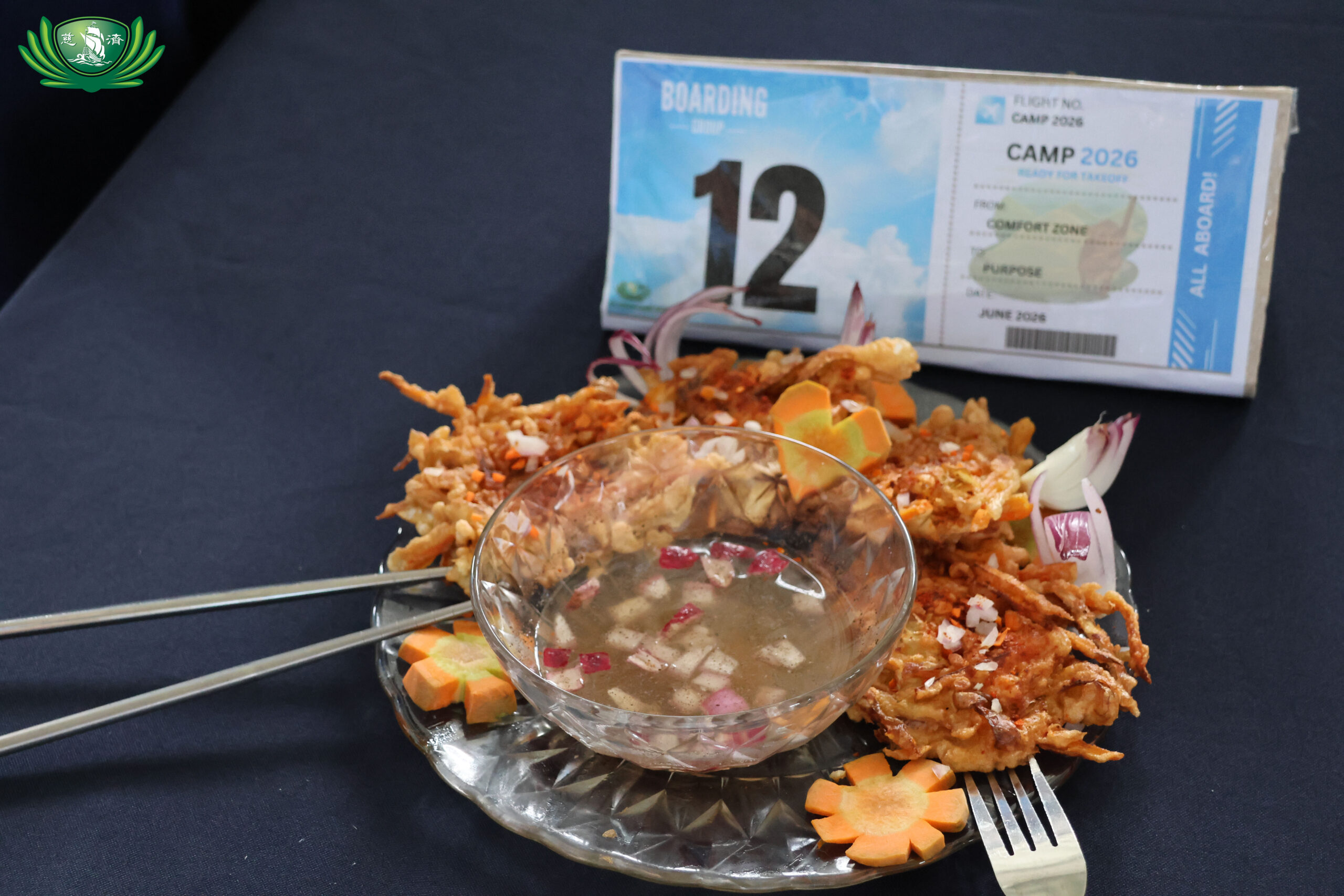
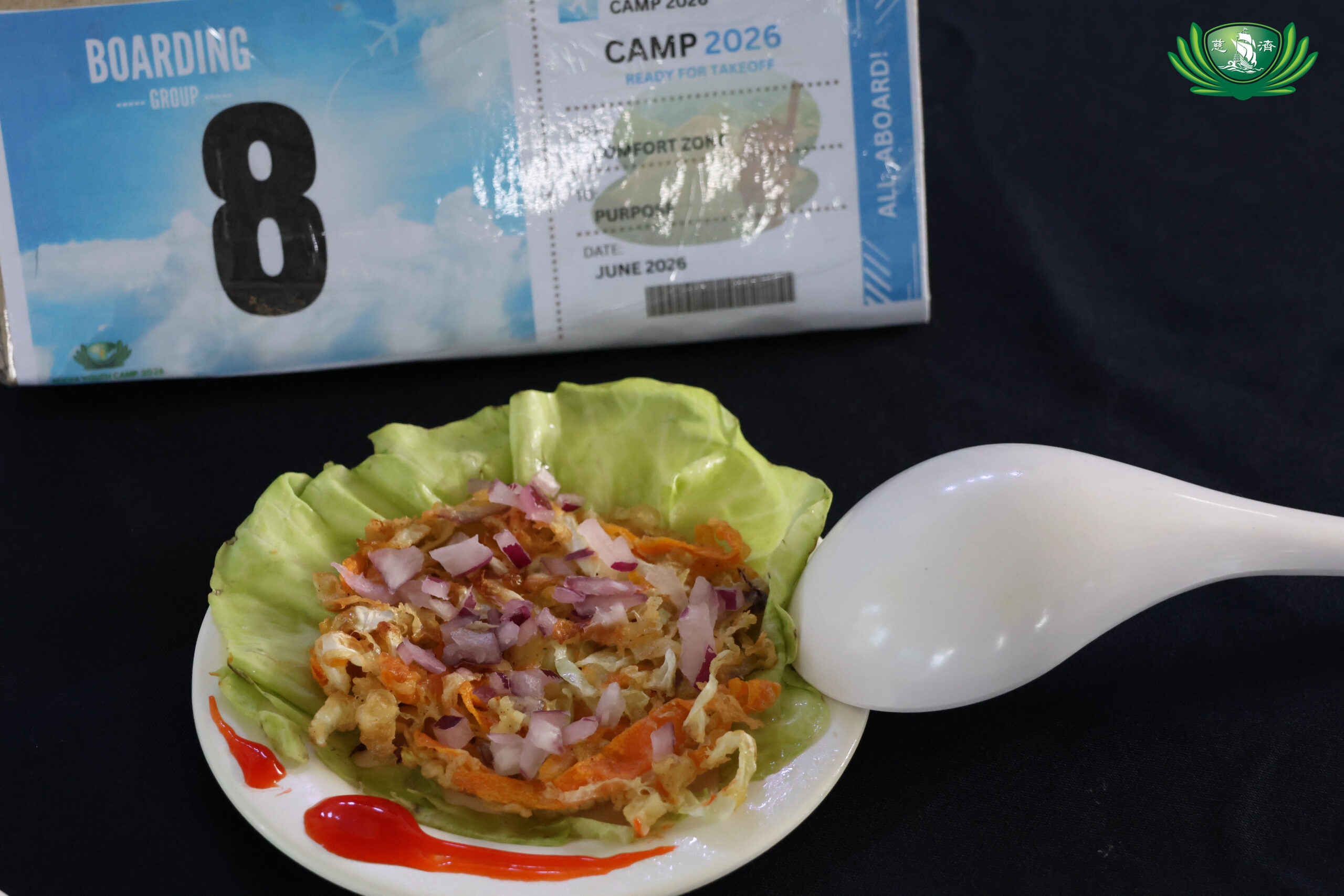
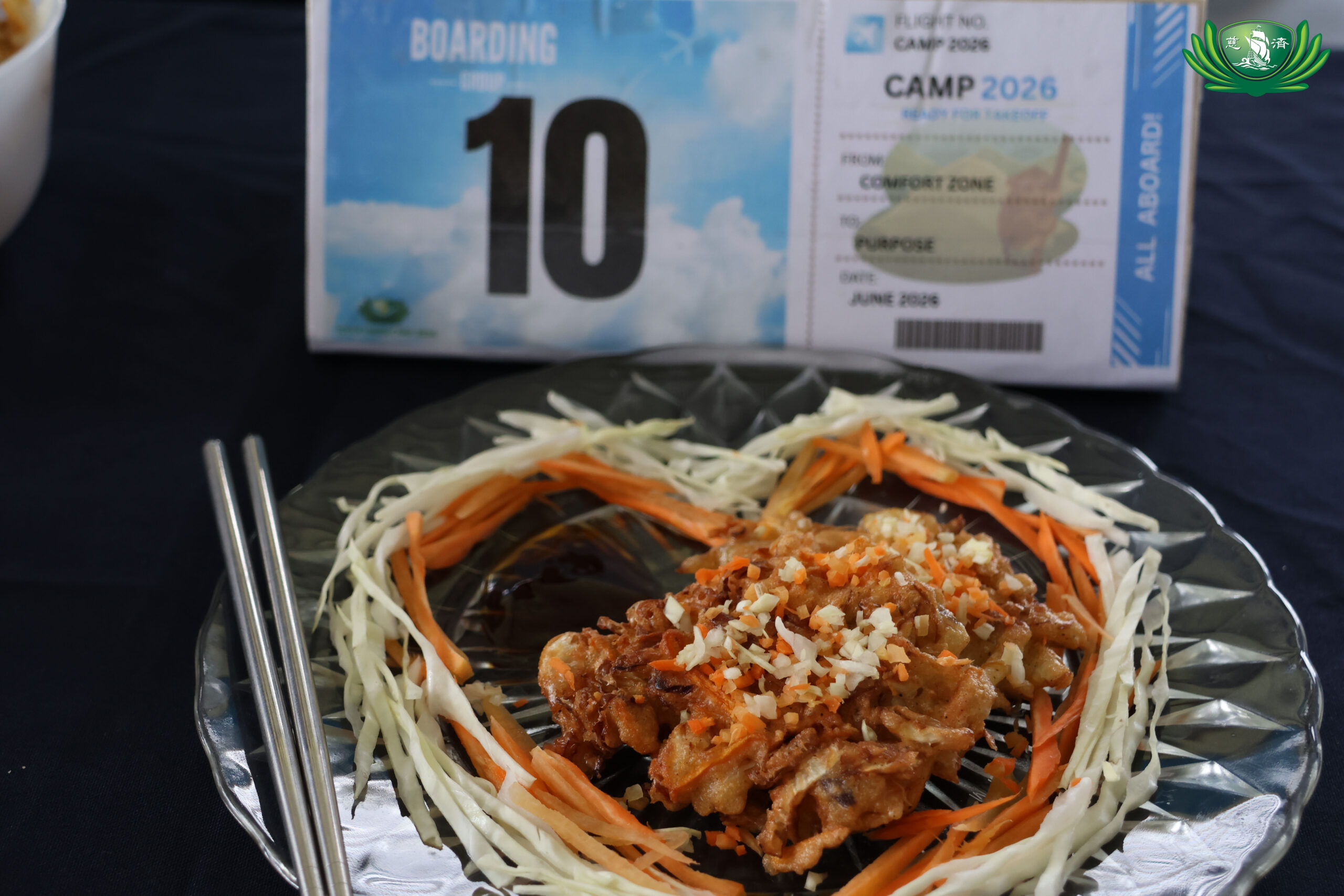
As part of the Cooking Challenge, participants impressed the judges with their creative and innovative takes on local ingredients. Each group showcased their culinary skills through unique presentations and flavor combinations. Featured dishes included “Giya sa Ukoy” (Group 8), “Ai Crunch” (Group 10), and “Dasig Ukoylicious” (Group 12), highlighting their creativity and effort in the competition.
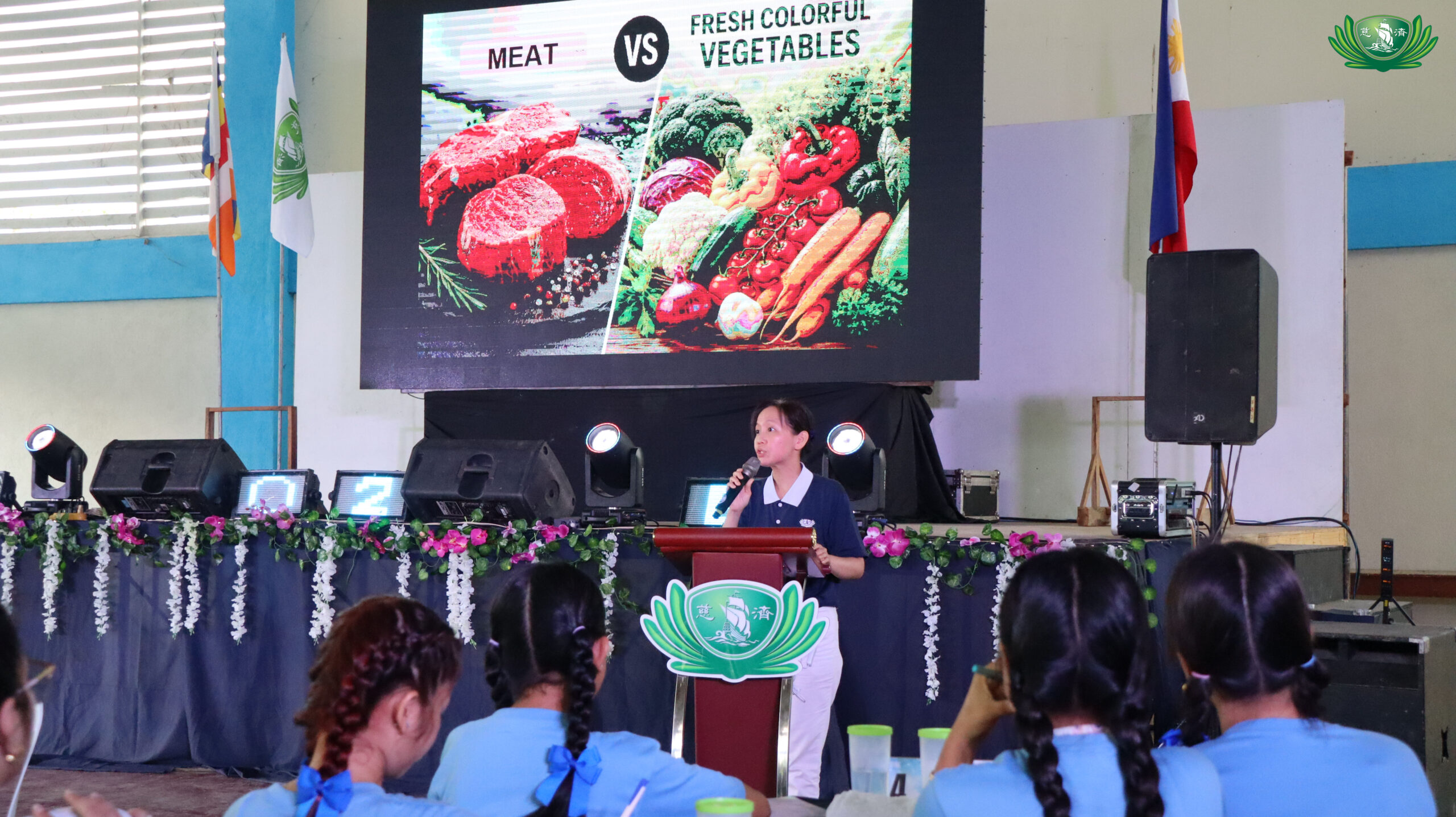
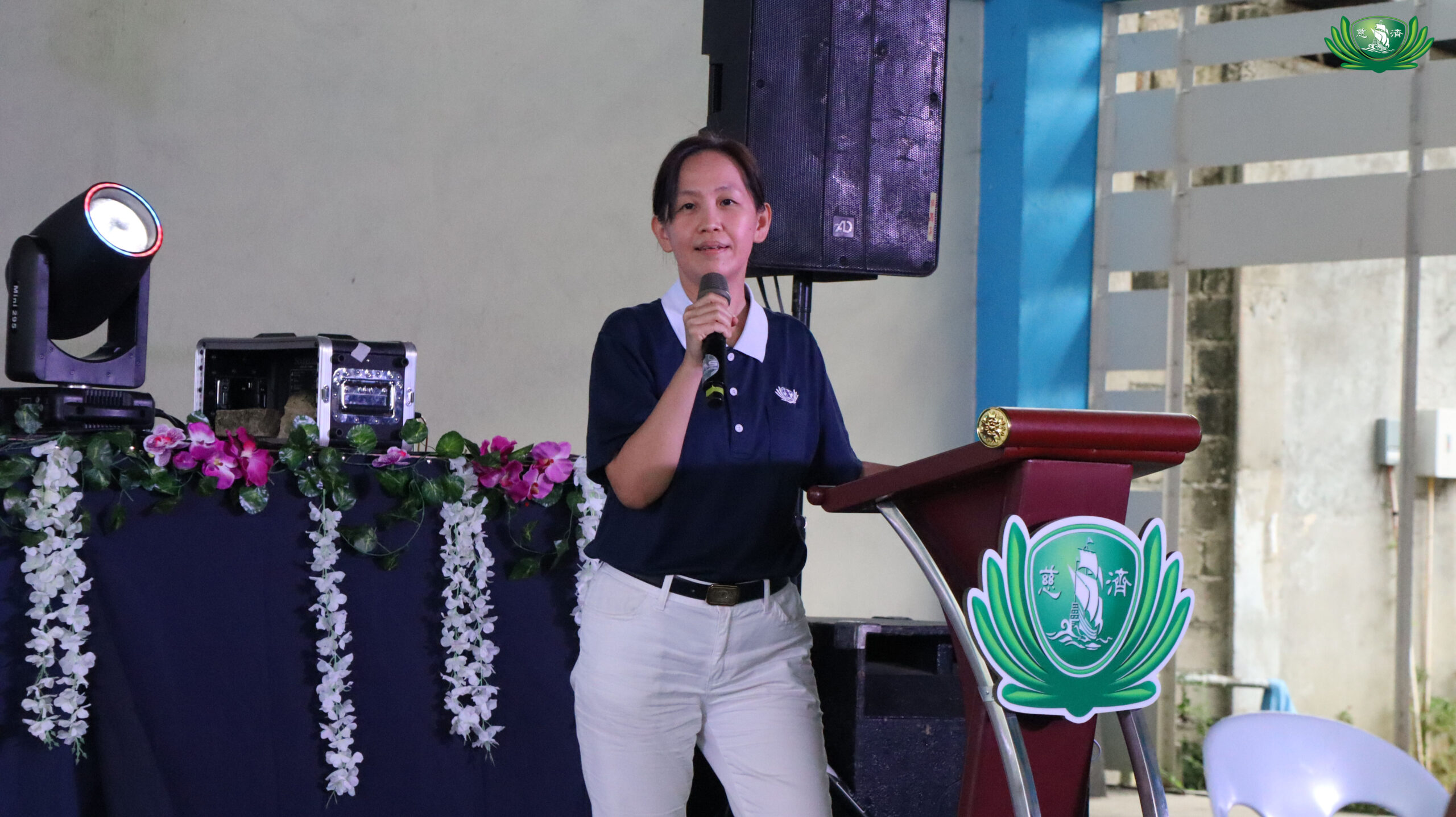
The day’s learning culminated in Fueling the Journey: Compassion Through Vegetarian Living, a talk delivered by Sister Carolina Uy, a Tzu Chi volunteer from Manila, that deepened the campers’ understanding of the connection between food choices and compassionate living. Building on the themes introduced earlier, Sister Carolina encouraged participants to view vegetarianism not merely as a dietary preference but as a conscious commitment to reducing suffering and promoting harmony.
Anchored on a teaching from Master Cheng Yen that “animals are sentient and compassionate,” she reminded campers that animals are living beings capable of feeling pain and emotions. She also discussed how society often becomes disconnected from the realities of food production, especially when consumption is driven by habit rather than awareness.
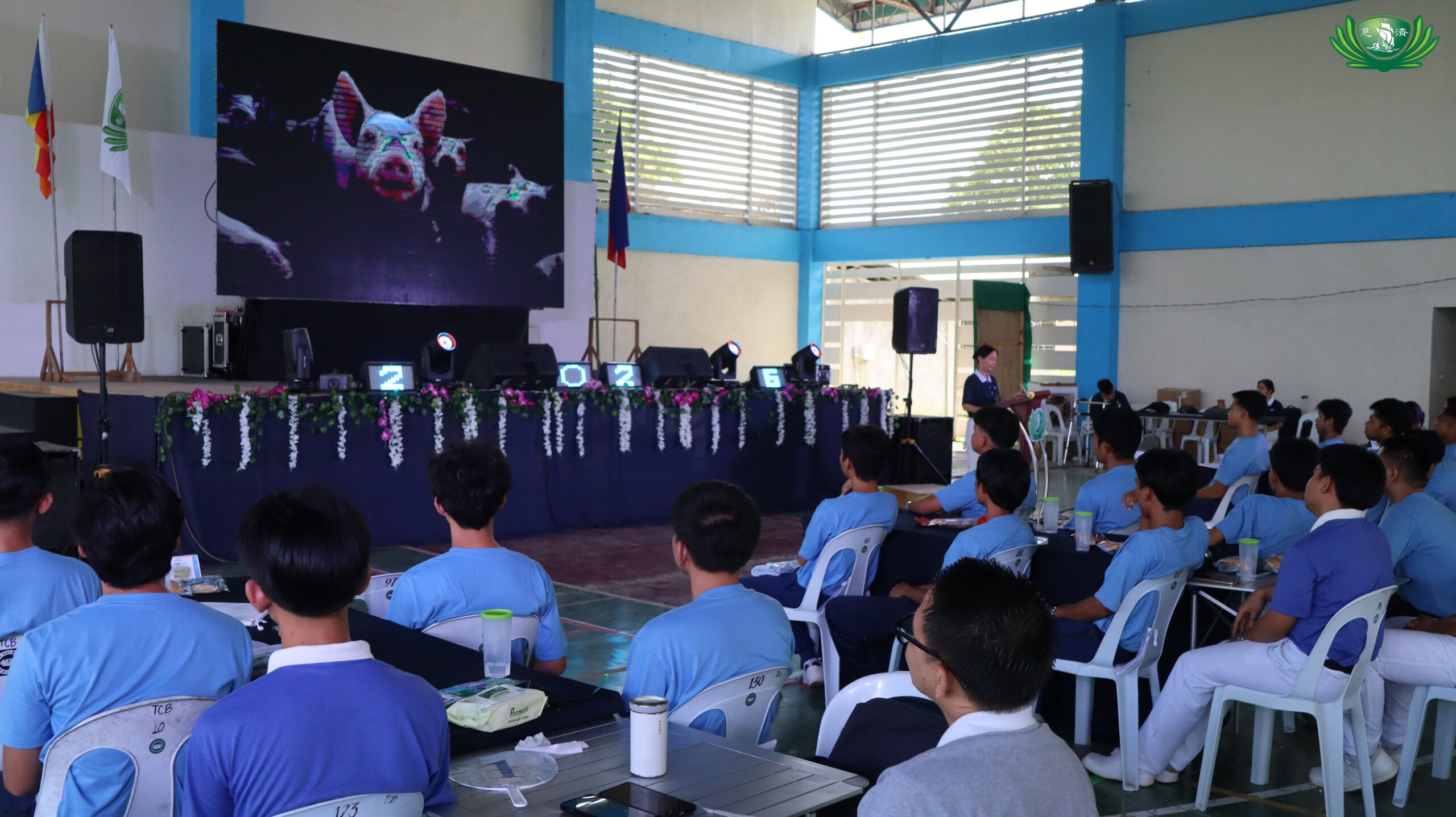
A video presentation featuring foreign butchers further exposed practices within the meat industry that are often hidden from consumers. One statement from the video, “We always done it this way,” highlighted how harmful systems can continue when traditions are accepted without question, even when ethical concerns exist. Through this discussion, Sister Carolina encouraged participants to become more mindful and responsible in their daily choices.
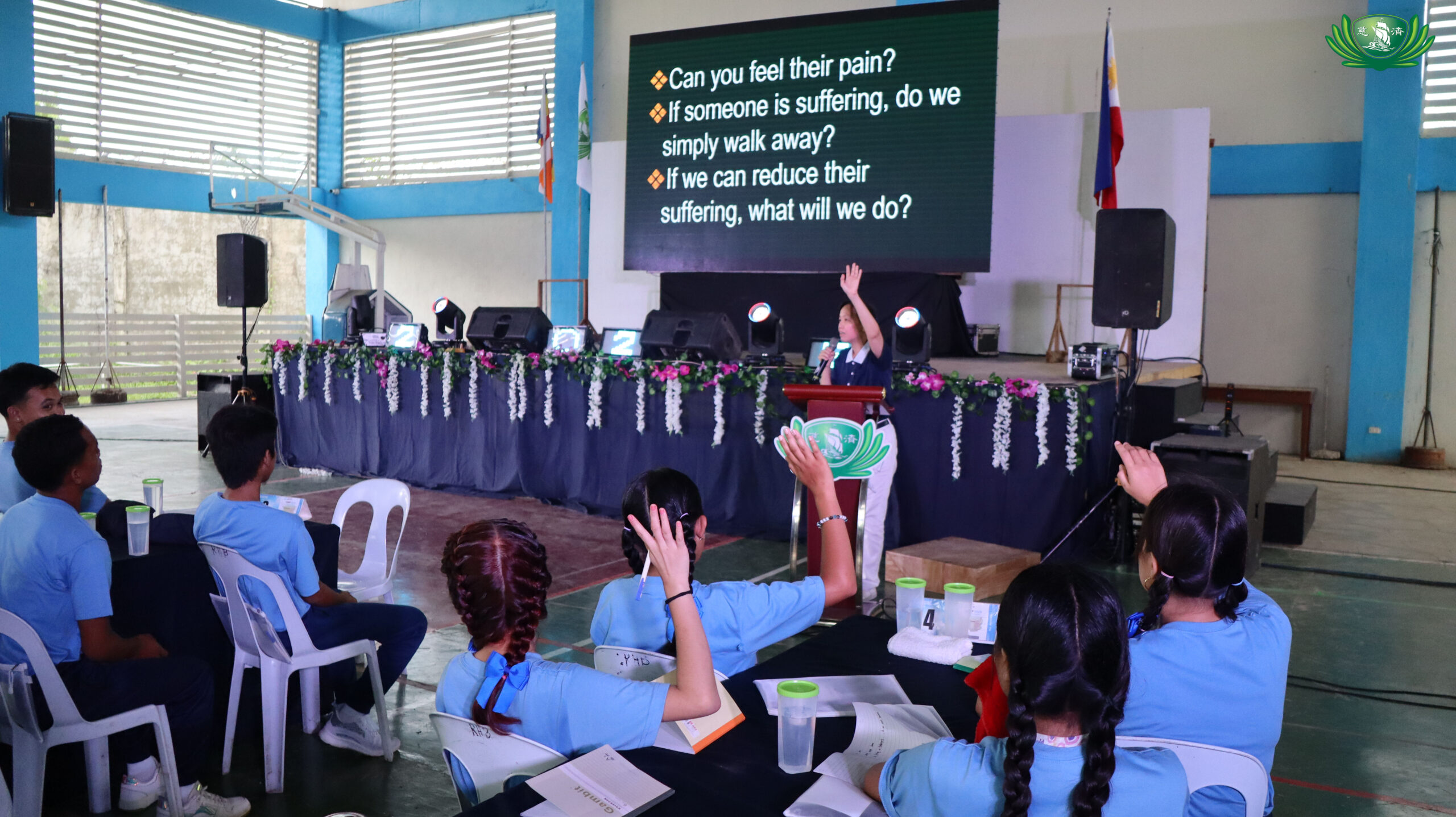

Sister Carolina emphasized that vegetarian living is compassion put into action. “When we choose with wisdom and make some changes, it can definitely reduce the disasters and conflicts in this world,” she shared, expressing her belief that individual choices can gradually inspire wider change within communities. She also stressed the importance of personal transformation, saying, “It’s really important to start with ourselves, look within, minimize our greed, our anger, our hatred, and practice it daily.”
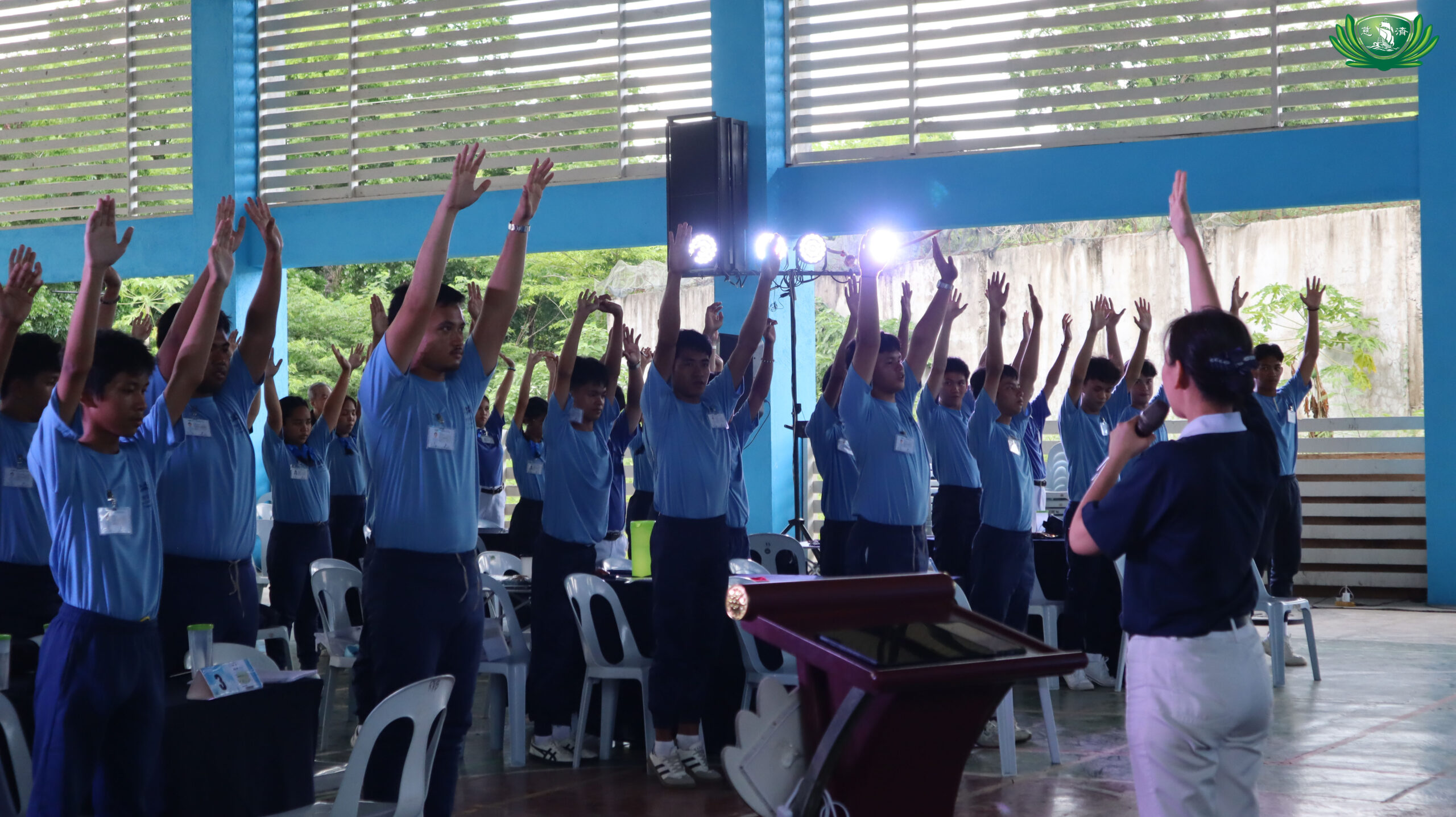
As the sessions concluded, campers were left with a deeper understanding that caring for the environment and practicing compassion do not always require grand gestures.
Rather, they begin with small, intentional choices made every day. From recognizing the impact of personal habits, to preparing plant-based meals, to embracing mindful living, the activities and discussions throughout the camp demonstrated that awareness becomes meaningful when transformed into action.
More than a series of talks and activities, the Tzu Chi Bohol Youth Life Camp 2026 served as a powerful reminder that a greener, kinder, and more sustainable future begins with the choices individuals make today.